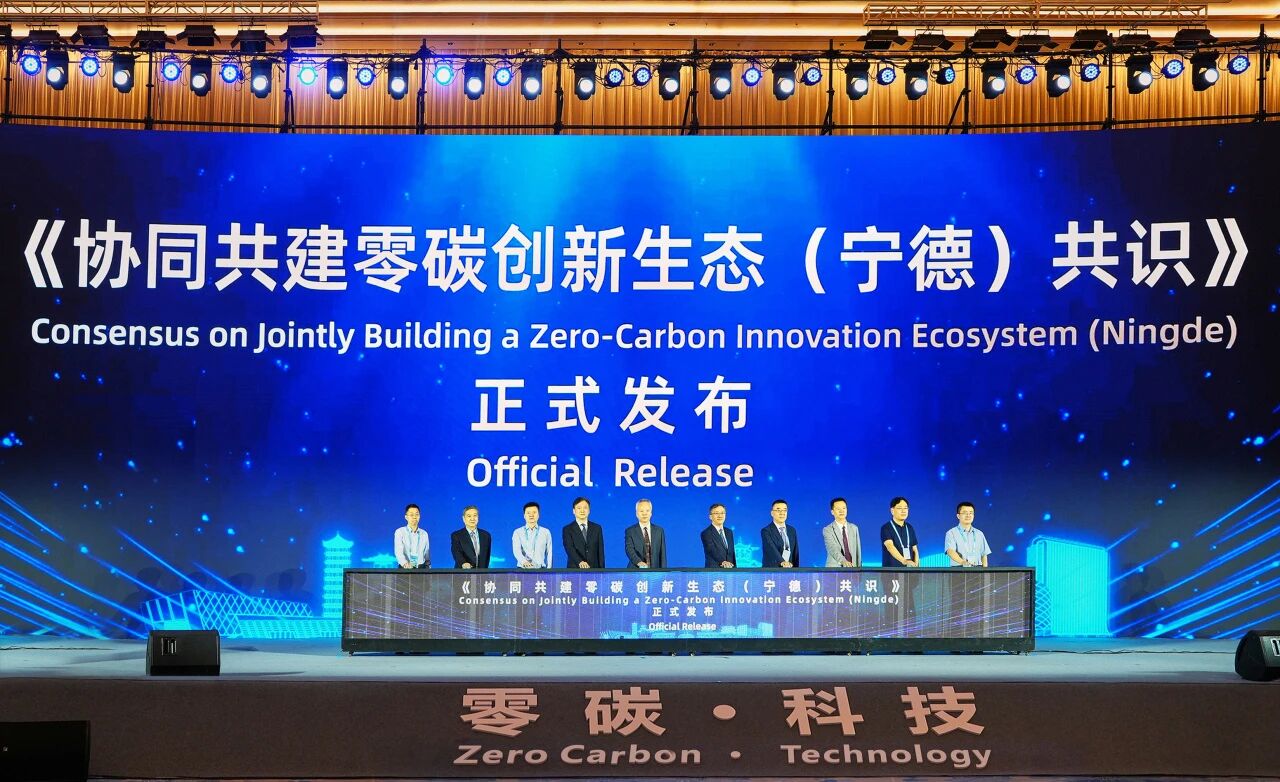
在《巴黎协定》达成十周年、我国宣布碳达峰碳中和目标五周年之际,为加快构建新型能源体系,推进石化、煤炭、钢铁、有色金属、建筑、电力、装备制造等重点产业绿色低碳转型,中国机械工业联合会、中国电力企业联合会、中国石油和化学工业联合会、中国煤炭工业协会、中国钢铁工业协会、中国五矿化工进出口商会、中国建筑节能协会、中国工业节能与清洁生产协会、中国电池工业协会、中国化学与物理电源行业协会十家全国性行业组织于9月17日,在福建宁德举办的2025世界储能大会开幕式上联合发布《协同共建零碳创新生态(宁德)共识》。《共识》内容如下:
一、中国深入实施“四个革命、一个合作”能源安全新战略,推动能源转型发展取得显著成就,为重点工业领域加快绿色低碳转型创造前所未有的历史性机遇,坚定不移发展新质生产力,推动传统产业高端化、智能化、绿色化发展,激发内生动力和创新活力。
二、探索重点碳排放领域深度脱碳路径。加强能源与用能产业协同布局,促进用能结构调整优化;推动用能方式系统性变革,强化用能场景创新牵引技术供给;深挖节能与能效提升潜力,推进能源节约集约循环高效利用;加快可再生能源替代,推动能源电气化和数智化进程。
三、推动清洁能源技术与重点碳排放领域深度融合,推进基础科学研究、核心技术攻关和适用型产品开发,打造面向工厂、园区、社区的零碳示范场景,研究符合现实需求的节能降碳方案,加快零碳科技创新成果转化应用,培育发展零碳新产业、新业态和新模式。
四、发展安全可靠、绿色高效、经济实用的新型储能技术,支持储能在重点工业领域场景推广应用,参与构建源网荷储一体化的综合智慧能源系统,发挥储能促进新能源消纳、保障供电可靠、平抑负荷波动、辅助电网稳定、提高能源利用效率等功能价值,扩大节能降碳成效。
五、发挥行业组织桥梁与引领作用,推动和引领国际规则制定,搭建跨国界、跨区域、跨行业、全产业链条的交流合作平台,构建“政产学研金服用”多方参与、开放融合、持续进化的零碳创新生态,集聚全球优质资源、创新智慧和先进经验,促进市场供需对接,组织多边事务磋商,推动关键问题解决,为重点工业领域绿色低碳转型贡献前瞻性、高质量、可实施、易推广的中国方案。
Consensus on Jointly Building a Zero-Carbon Innovation Ecosystem (Ningde)
I. China will further implement its new energy security strategy featuring "four reforms and one cooperation" to facilitate remarkable achievements in energy transition and development, and create unprecedented historical opportunities for accelerating green and low-carbon transition in key industrial sectors. We will steadfastly develop new quality productive forces, and make traditional industries higher-end, smarter and more eco-friendly to stimulate endogenous momentum and innovative vitality.
II. Explore pathways for deep decarbonization in key carbon-emitting sectors. Strengthen coordinated arrangements for energy and energy-consuming industries, and facilitate the adjustment and optimization of the energy use structure; promote the systematic transformation of energy consumption patterns, and enhance the supply of technologies driving innovations in energy consumption scenarios; fully tap the potential for energy conservation and energy efficiency improvement to advance the economical, intensive, circular and efficient use of energy; accelerate renewable energy substitution while advancing the electrification, digital and intelligent transformation of energy.
III. Promote the deep integration of clean energy technologies with key carbon-emitting sectors, advance basic scientific research, research on core technologies and development of applicable products, develop zero-carbon demonstration scenarios for factories, industrial parks and communities, explore energy conservation and carbon reduction solutions tailored to real-world needs, accelerate the commercialization of zero-carbon technological innovations, and foster and develop new zero-carbon industries, forms of business, and models.
IV. Develop safe and reliable, green and efficient, cost-effective and practical new-type energy storage technologies, support the application and extension of energy storage to scenarios in key industrial sectors, and participate in the establishment of source-grid-load-storage integrated smart energy systems. Bring into play the role of energy storage in promoting new energy accommodation, ensuring reliable power supply, smoothing load fluctuations, assisting in maintaining grid stability and improving energy efficiency to expand the achievements in energy conservation and carbon reduction.
V. Leverage the role of industry organizations as a bridge and leader to promote and lead international rule making, build platforms for exchanges and cooperation through industrial chains across countries, regions and sectors, and create an open, inclusive, and constantly evolving zero-carbon innovation ecosystem that involves the government, industry, universities, research institutes, financial institutions, service providers, and users, pool quality resources, innovation wisdom and advanced experience from all over the world, promote market supply and demand matching,organize multilateral consultations to promote the resolution of key issues, and contribute forward-looking, high-quality, viable and easy-to-promote Chinese solutions to green an low-carbon transition of key industrial sectors.
来源:世界储能大会
编辑:刘宁芬
审核:金芳 林珺